THE TRUE PICTURE OF HERSELF
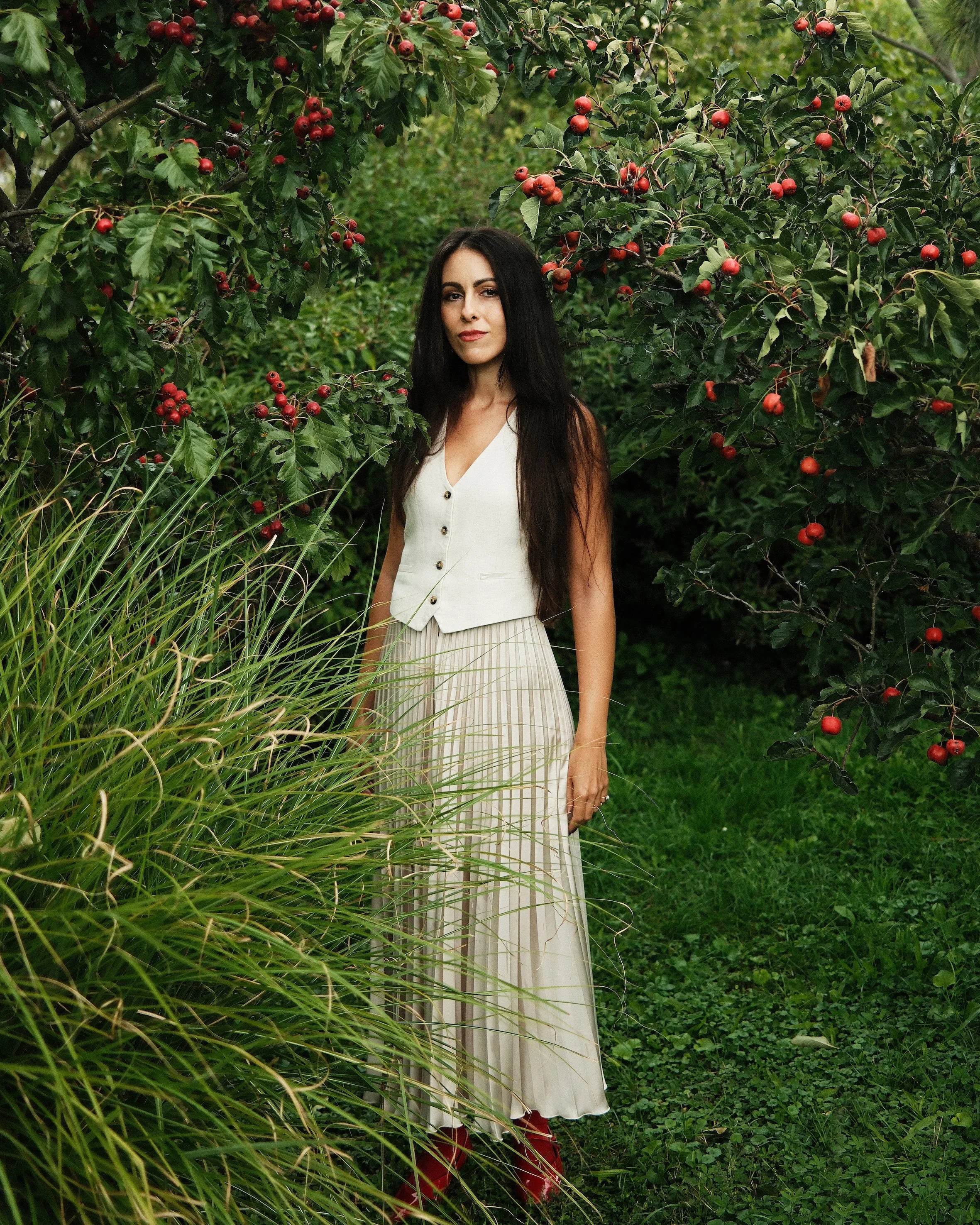
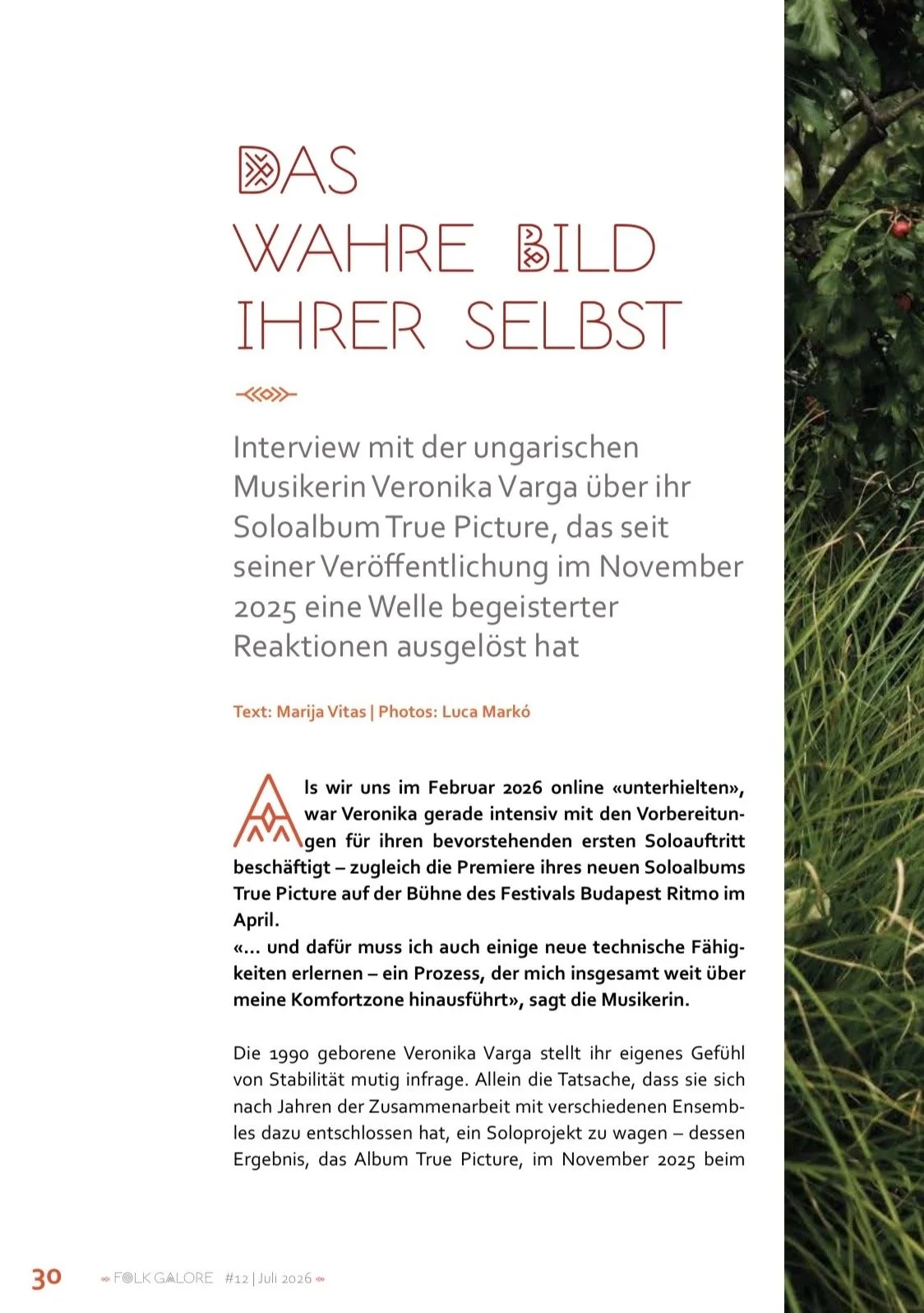
Interview with the Hungarian musician Veronika Varga about her solo album True Picture, which since its release in November 2025 has triggered a wave of enthusiastic reactions.
When we “spoke” online in February 2026, Veronika was intensely occupied with preparations for her upcoming first solo performance — at the same time the premiere of her new solo album True Picture on the stage of the Budapest Ritmo festival in April. “...and for that I also have to learn some new technical skills — a process that overall leads me far beyond my comfort zone,” says the musician.
Born in 1990, Veronika Varga courageously questions her own sense of stability. The mere fact that, after years of collaboration with various ensembles, she decided to venture into a solo project — whose result, the album True Picture, was released in November 2025 by the German label CPL-Music — shows the young artist’s willingness to challenge herself and struggle with her own insecurities.
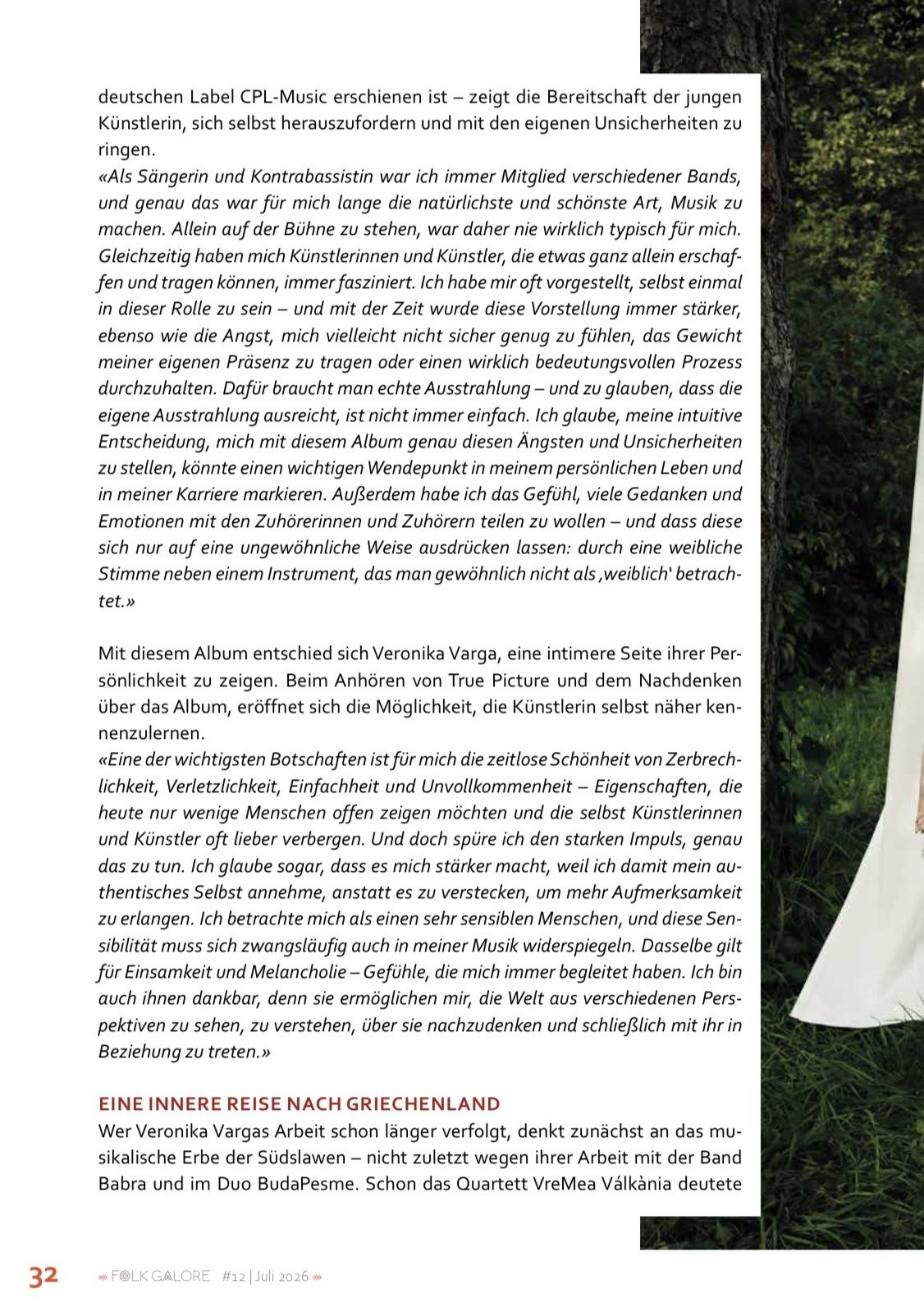
“As a singer and double bassist, I was always a member of different bands, and for a long time that was the most natural and most beautiful way for me to make music. Standing alone on stage was therefore never really typical for me. At the same time, artists who can create and carry something completely on their own always fascinated me. I often imagined myself one day in that role — and over time this image became stronger and stronger, just like the fear that I might perhaps not feel secure enough to carry the weight of my own presence or endure a truly meaningful process. For that one needs real charisma — and believing that one’s own charisma is enough is not always easy. I believe my intuitive decision to confront exactly these fears and insecurities with this album could mark an important turning point in my personal life and in my career. Furthermore, I feel the desire to share many thoughts and emotions with listeners — and that these can only express themselves in an unusual way: through a female voice next to an instrument that is usually not regarded as ‘female’.”
With this album, Veronika Varga decided to show a more intimate side of her personality. While listening to True Picture and reflecting on the album, the possibility opens up to get to know the artist herself more closely.
“One of the most important messages for me is the timeless beauty of fragility, vulnerability, simplicity, and imperfection — qualities that today only few people wish to show openly and which even artists themselves often prefer to hide. And yet I feel a strong impulse to do exactly that. I even believe that it makes me stronger, because through it I accept my authentic self instead of hiding it in order to gain more attention. I consider myself a very sensitive person, and this sensitivity inevitably must also be reflected in my music. The same applies to loneliness and melancholy — feelings that have always accompanied me. I am also grateful to them, because they allow me to see the world from different perspectives, to understand it, to reflect on it, and finally to enter into relationship with it.”
AN INNER JOURNEY TO GREECE
Whoever has followed Veronika Varga’s work for a longer time initially thinks of the musical heritage of the South Slavs — not least because of her work with the band Babra and in the duo BudaPesme. Even the quartet VreMea Válkánia, however, hinted at a more broadly conceived journey through the Balkans — a journey that extends her solo album True Picture even further and in the process brings Greek music just as strongly into the light as Hungarian folk traditions.
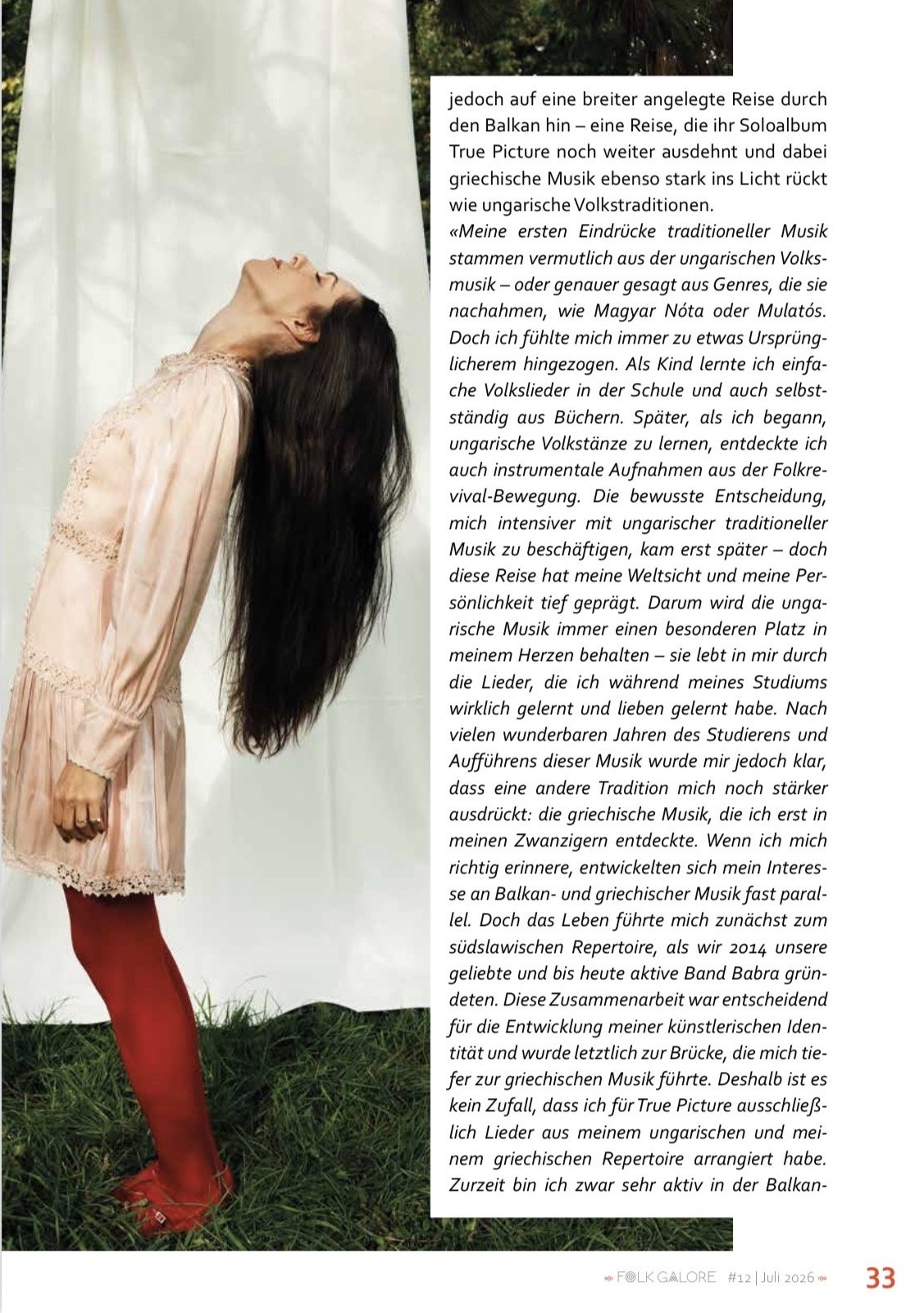
“My first impressions of traditional music probably come from Hungarian folk music — or more precisely from genres that imitate it, such as Magyar Nóta or Mulatós. But I always felt drawn toward something more original. As a child I learned simple folk songs at school and also independently from books. Later, when I began learning Hungarian folk dances, I also discovered instrumental recordings from the folk revival movement. The conscious decision to engage more intensively with Hungarian traditional music came only later — but this journey deeply shaped my worldview and my personality. Therefore Hungarian music will always retain a special place in my heart — it lives within me through the songs that I truly learned and learned to love during my studies. After many wonderful years of studying and performing this music, however, it became clear to me that another tradition expresses me even more strongly: Greek music, which I only discovered in my twenties. If I remember correctly, my interest in Balkan and Greek music developed almost in parallel. Yet life first led me toward the South Slavic repertoire when in 2014 we founded our beloved and still active band Babra. This collaboration was decisive for the development of my artistic identity and ultimately became the bridge that led me deeper toward Greek music. Therefore it is no coincidence that for True Picture I arranged exclusively songs from my Hungarian and my Greek repertoire. At present I am indeed very active in the Balkan music — especially with Macedonian, Serbian and Bosnian songs — but these two traditions remain those with which I feel most deeply connected, because they are closely interwoven with my personal life and my musical path.”
In recent years, Greek music seems to have assumed an increasingly central role in Veronika Varga’s work — without, however, displacing her enduring love for the South Slavic tradition.
“Greek music is particularly closely connected to my sense of self. This connection lies not only in the music itself, but also in the way of life that I had the opportunity to experience directly during an Erasmus semester in Greece at the age of 27. Another important aspect is the language: by now I understand and speak Greek at a fairly advanced level — something that I have not yet achieved with the other Balkan cultures whose songs I sing. Understanding every word that I sing naturally strengthens my self-confidence and gives me the wonderful opportunity to speak directly to the Greek audience in its mother tongue during a concert.”
THE VOICE — ABOVE ALL
Veronika Varga is usually associated not only with her angelic, finely vibrating voice, whose strength lies precisely in its subtlety. Equally inseparable, she seems to be connected with the deeply sounding “bear” among instruments — the double bass.
“First and foremost, I am a singer. I have always used the double bass rather in a supporting role — both in Hungarian folk music and in Serbian tamburica music. The atmosphere that I seek with the bass arises from its simple yet versatile possibilities for accompanying the voice. Interestingly, during the years with Babra I was often told that sometimes it seemed as if I were hiding behind my bass — and that perhaps I sang less than the audience expected or hoped for.”
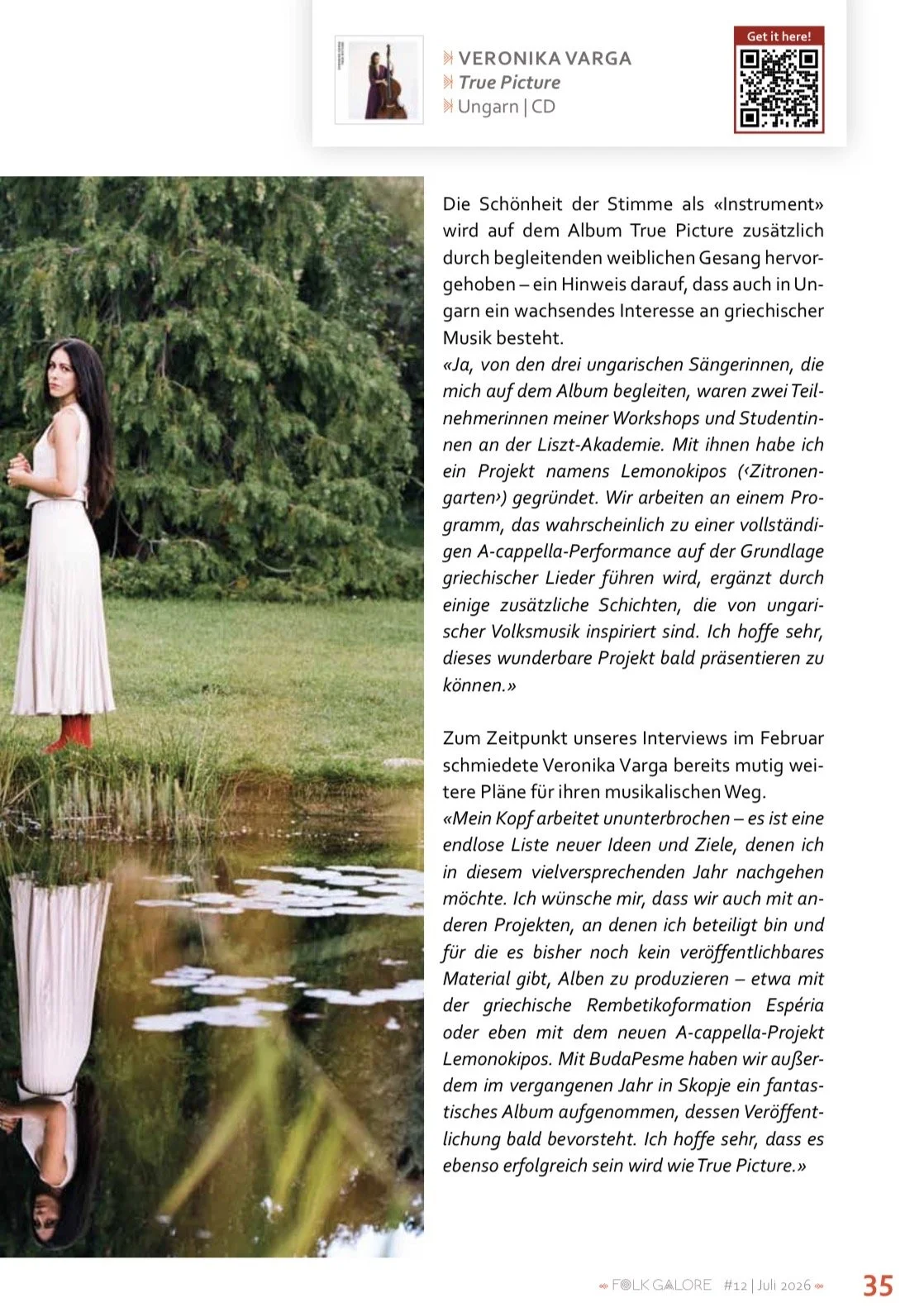
The beauty of the voice as an “instrument” is additionally emphasized on the album True Picture through accompanying female vocals — an indication that there is also a growing interest in Greek music in Hungary.
“Yes, of the three Hungarian singers who accompany me on the album, two were participants in my workshops and students at the Liszt Academy. Together with them I founded a project called Lemonokipos (‘Lemon Garden’). We are working on a programme that will probably lead to a full a cappella performance based on Greek songs, complemented by some additional layers inspired by Hungarian folk music. I very much hope to be able to present this wonderful project soon.”
At the time of our interview in February, Veronika Varga was already boldly forging further plans for her musical path.
“My mind works without interruption — it is an endless list of new ideas and goals that I would like to pursue in this promising year. I wish that we can also produce albums with other projects in which I am involved and for which there is not yet any published material — for example with the Greek rebetiko formation Espéria, or with the new a cappella project Lemonokipos. In addition, with BudaPesme we recorded a fantastic album in Skopje last year, whose release is soon approaching. I very much hope that it will be just as successful as True Picture.”

ekultura.hu: „A hatás lenyűgöző” – Zenék a nagyvilágból – Veronika Varga: True Picture #review #critics #album

Musenblaetter.de: ”Ein akustisch-ästhetischer Hochgenuß” („Magasszintű akusztikai és esztétikai élmény”) – #album_review #true_picture

Folkradio.gr ”From Danube to the Aegean: Veronika Varga’s Journey into Greek Music” #interview #greek

WMN „Nem akarja, hogy elhalkuljon bennünk a zene; Varga Veronika énekesnő elhozza nekünk a balkáni dallamokat #interjú #balkán #éneklés

Magyar Zene Háza: „Markánsan jelenik meg a nő mint egyéniség” - #interjú #mortissaproject

Papageno: „Mortissa, a nőiesség határtalansága” - #interjú #mortissaproject

Papageno: „Alla Greca – Önismerettel átszőtt görög zenei workshopokat indított Varga Veronika” - #interjú #workshop #allagreca

Ritmus&Hang: „A rebetiko-hatás” - #interjú #rebetiko

Ritmus&Hang: „Magyar énekesnő, görög hang” - #interjú #görög

Papageno: „Jugonosztalgia – Minden pesti kávéházat meghódít a BudaPesme” - #budapesme #balkán

Magazin Etnoumlje: „Rezoniranje se Balkanom” (szerbül) - #interjú #budapesme #balkán

Ritmus&Hang: „Nincs véleményezés, nincs kritika” - #interjú #coaching #budapesme

Papageno: „Új lemezzel jelentkezik a Babra” - #babra #tambura #balkán

Papageno: „A legrangosabb világzenei listára került a Babra debütáló albuma” - #babra #tambura #balkán